Future Made in Australia needs a home-grown recipe
By Elizabeth Thurbon and Moksha Watts
Rather than rigid adherence to existing policy, test, observe, adapt should be the policy approach for Australia’s emerging clean-energy economy.
Four of the federal government's signature Future Made in Australia programs were among the casualties of the May federal budget. About $1.3 billion was clawed back from Hydrogen Headstart, Solar Sunshot and the Battery Breakthrough Initiative, while the Hydrogen Production Tax Incentive was written down by a $1.9 billion to 2030 amid weaker-than-expected production forecasts.
It is easy for critics to say that governments should stop trying to shape markets and leave the energy transition to private capital. But that is too simplistic and would be the wrong lesson to take.
Australia’s future will increasingly depend on where it sits in the emerging clean-energy economy and that will come down to how prepared it is to support the industries that will shape tomorrow’s prosperity. The problem is not the vision of Future Made in Australia (FMiA); what the first two years of these programs have shown is that the issue lies in importing policy tools from the United States and Europe and thinking they will work in Australia.
These programs were, in important respects, a me-too response to the United States' Inflation Reduction Act and the European Green Deal, both of which were designed for large, industrially diversified economies with deep domestic markets and complex manufacturing bases. Australia is none of those things.
Australia is export-oriented but positioned at the end of long supply chains. We are resource-rich, services-heavy and industrially lean. Thus — as we have discovered — layering production subsidies onto a system lacking coordinated permitting, enabling infrastructure, anchored industrial demand and clearly allocated long-term risk will not crowd in the scale of private capital required.
So, it is right — and actually a relief — that the Government looked at its policy tools and acknowledged in the budget that the approach was not working. It would be wrong to assume the broader goal of a diversified Australian economy powered by clean energy has been dumped because in a world of rising fossil fuel volatility, insecure supply chains and geostrategic risks, a future made in Australia is not a tagline, it is essential. The opportunity now is to learn from our mistakes and pivot.
Northeast Asia’s successful late industrialisers — Japan, South Korea, Taiwan and China — long ago grasped the value of this pragmatic, goal-oriented economic governance. A defining feature of their world-class industry-building efforts has been their willingness to change their policies to achieve their goals. When a particular policy failed to deliver the desired outcome, the typical response was not to abandon the goal, but to try a different policy approach.
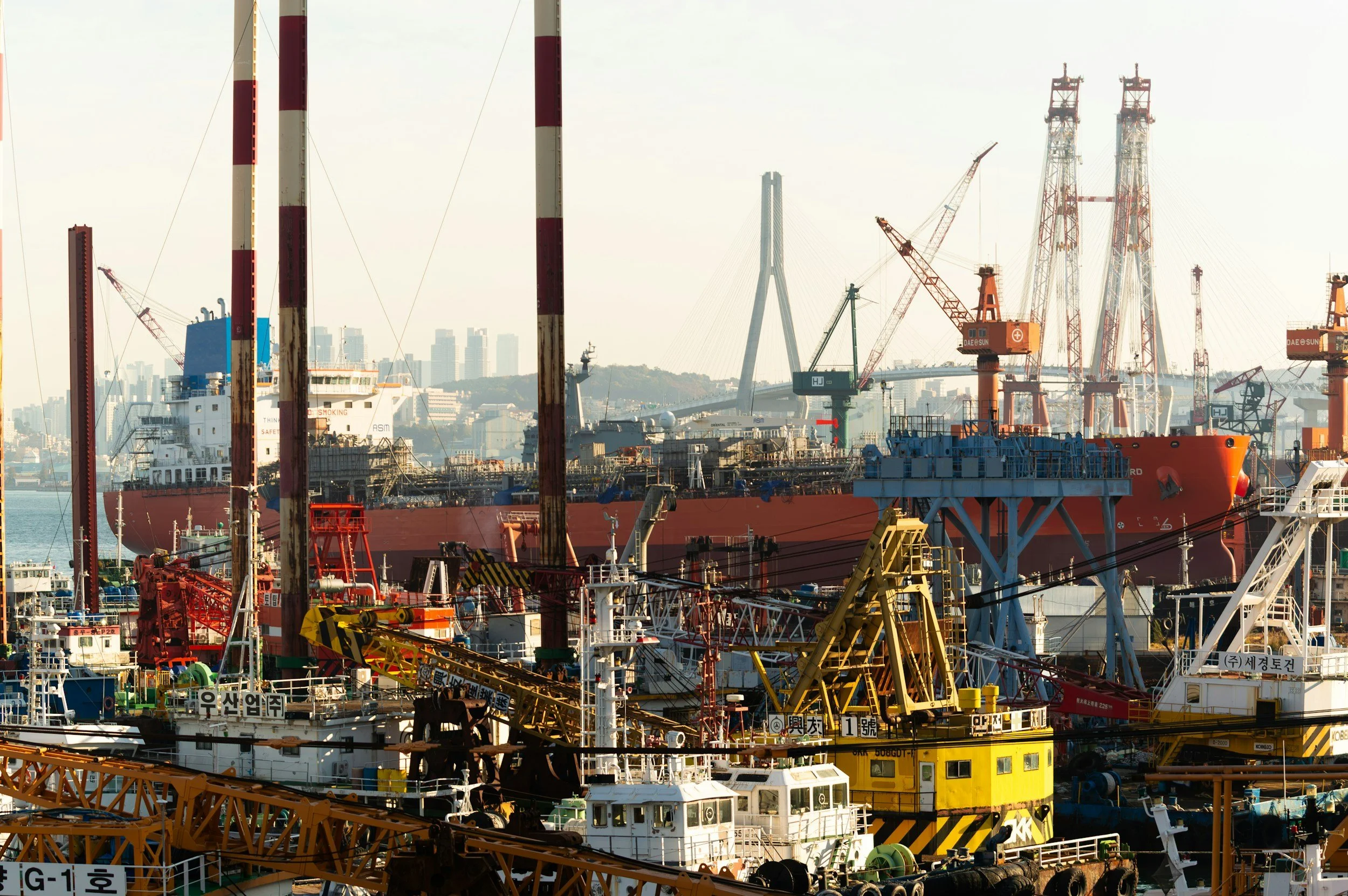
Korea's rise as a global leader in industries ranging from shipbuilding and semiconductors to green and digital technologies was not the product of a single or fixed master plan; it emerged through successive rounds of experimentation in which governments adjusted incentives, institutions, and governance in response to changing circumstances while maintaining a clear sense of purpose.
Korea's current efforts to build an offshore wind industry is an example. Faced with slower-than-expected deployment under a developer-led model, policymakers have chosen not to abandon their offshore wind ambitions but to rethink how they do it. Recent reforms replace the previous "open door" approach, in which developers identified sites and navigated approvals themselves, with a more government-led model centred on designated development zones, streamlined approvals and coordinated planning. This flexibility in pursuit of an objective is exactly what we need more of in Australia.
The opportunity is hiding in plain sight. According to international accelerator organisation, the Mission Possible Partnership, Australia now hosts a substantial pipeline of around 46 commercial-scale green industrial projects, looking to make final investment decisions across ammonia, steel, aviation, aluminium and methanol. Alongside that, we have more than 67GW of renewable generation and storage projects in the Australian Energy Market Operator’s connection queue alone, with further large-scale development in WA.
These projects exist because investors see the opportunity in Australia's wind, sun and resource base. Some will not proceed, as in any emerging industry. But the reason only one of the 46 industrial projects has reached a final investment decision is not a lack of ambition, capital or opportunity. It is the absence of coordinated policy capable of bringing energy supply, industrial demand and infrastructure development together at the scale and speed required.
Governments are often the most efficient bearers of the transition’s hardest risks: long-dated offtake, early-mover industrial exposure, and system-coordination risk. When no one allocates them clearly, projects price them in, lifting the cost of capital and slowing investment.
Production subsidies alone cannot fix that. What can work is a coordinated approach: anchoring demand through credible long-term offtake, sequencing infrastructure with industrial build-out, and allocating system-level risk to the party best able to bear it. Our forthcoming report from the Green Energy Statecraft project also sets out what is needed to go from ambition to execution in renewable energy and industry.
Industrial strategy, properly done, is a learning loop. Serious states set ambitious goals, test instruments, observe what works, and adjust. The government deserves credit for being willing to walk away from instruments that are not shifting the dial. What matters now is replacing them with sharper instruments designed for our circumstances.
We have already laid many of the foundations, the task now is to connect them.
This article was first published by The Energy on 23 June 2026.